

Excavator Size Guide: How to Choose the Right Excavator Weight Class for Any Construction Project
Choosing the right excavator size is one of the most important decisions when purchasing or renting construction equipment. An excavator that is too small may reduce productivity, while a machine that is too large can increase operating costs, transportation expenses, and fuel consumption.
With hundreds of excavator models available worldwide, buyers often face a common question:
What size excavator do I need for my project?
The answer depends on several factors, including operating weight, digging depth, bucket capacity, lifting requirements, working environment, and transportation limitations.
This complete Excavator Size Guide explains excavator weight classes, common machine sizes, applications, and how to select the right excavator for different construction projects.
Whether you are looking for a compact mini excavator for landscaping work or a heavy-duty excavator for mining and large infrastructure projects, understanding excavator sizes will help you make a better investment decision.
What Does Excavator Size Mean?
When people talk about excavator size, they usually refer to the machine’s weight class rather than only its physical dimensions.
An excavator’s size is mainly determined by:
1. Operating Weight
Operating weight is one of the most important specifications used to classify excavators.
It includes:
Machine weight
Standard bucket
Hydraulic oil
Fuel
Operator weight
For example:
A 5 ton excavator usually weighs around 4.5–6 tons.
A 20 ton excavator usually weighs around 20–22 tons.
A 30 ton excavator usually weighs around 30–35 tons.
Operating weight directly affects:
Digging force
Stability
Lifting capacity
Transportation requirements
2. Excavator Dimensions
The physical dimensions of an excavator also determine whether it can work efficiently on a job site.
Important dimensions include:
Overall length
Overall width
Machine height
Tail swing radius
Ground clearance
A compact excavator may access narrow residential areas, while a large excavator requires more working space.
3. Digging Performance
A larger excavator generally provides:
Greater digging depth
Longer reach
Higher bucket capacity
Stronger breakout force
However, larger machines are not always better. The best excavator size depends on matching machine capability with project requirements.
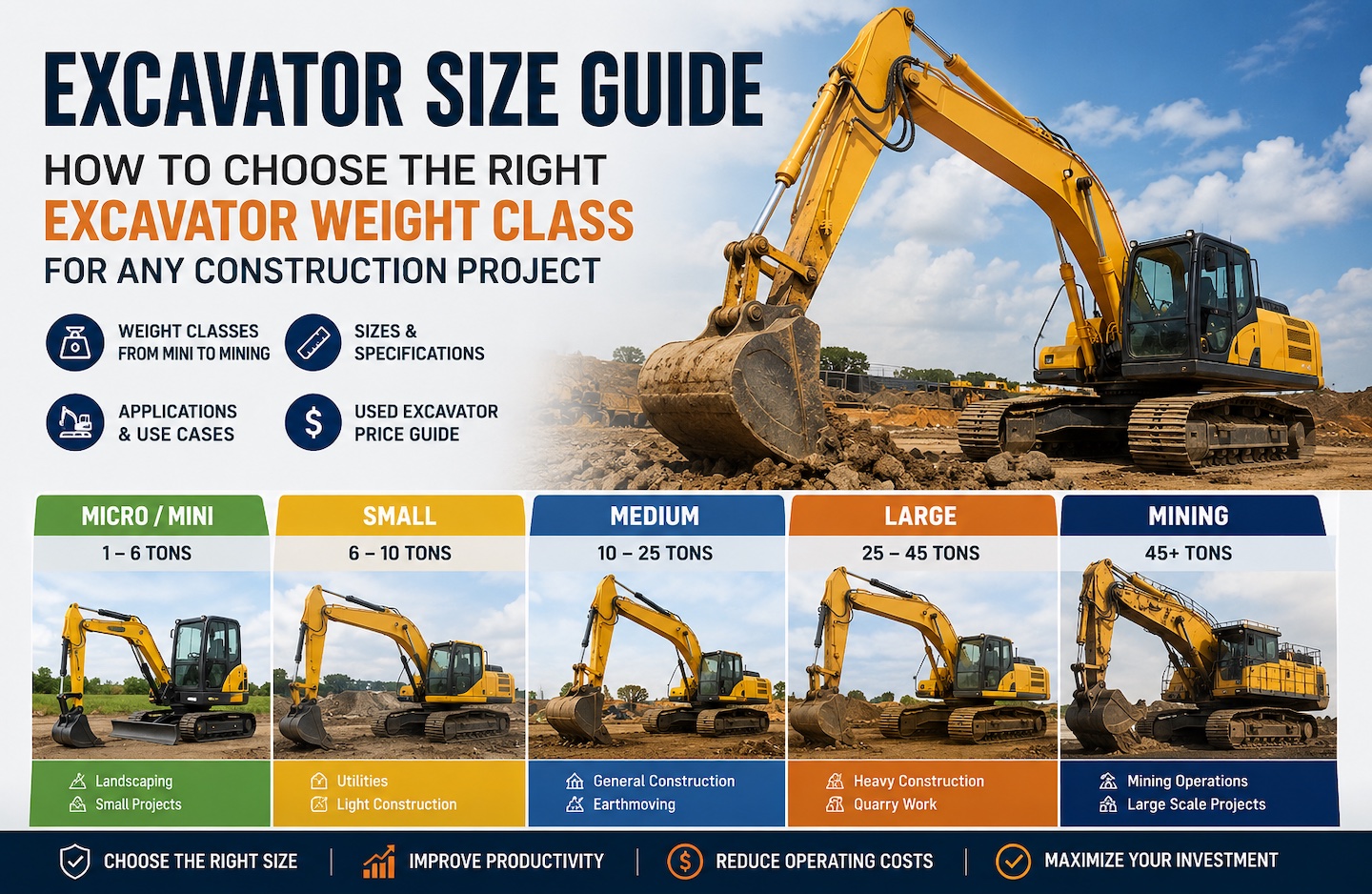
Excavator Weight Classes Explained
Excavators are commonly divided into several categories based on operating weight.
Although classifications may vary slightly between manufacturers, the following guide represents common industry standards.
Excavator Size Chart by Weight Class
Excavator Class Operating Weight Common Applications
Micro Excavator Under 2 tons Landscaping, small repairs, narrow spaces
Mini Excavator 2–6 tons Residential construction, utilities, gardening
Small Excavator 6–10 tons Small construction projects, road maintenance
Medium Excavator 10–25 tons General construction, earthmoving, infrastructure
Large Excavator 25–45 tons Heavy construction, quarry, large excavation
Mining Excavator 45+ tons Mining, major earthmoving projects
Mini Excavator Sizes (1–6 Tons)
Mini excavators are the smallest commonly used excavator category.
They are popular because they offer:
Easy transportation
Low fuel consumption
Operation in limited spaces
Lower purchase cost
Typical mini excavator weight:
1–6 tons
Common applications:
Landscaping
Residential construction
Pipeline installation
Small demolition
Underground utility work
Farm projects
Popular models include:
Kubota KX155-5
Yanmar ViO80
A 3–5 ton mini excavator is one of the most versatile choices for small contractors because it balances mobility and digging performance.
Typical Mini Excavator Specifications
Weight Class Bucket Capacity Digging Depth
1–2 Ton 0.02–0.08 m³ 1.8–2.5 m
3–4 Ton 0.08–0.15 m³ 2.5–3.5 m
5–6 Ton 0.15–0.25 m³ 3.5–4 m
Small Excavator Sizes (6–10 Tons)
Small excavators provide more power than mini excavators while maintaining good mobility.
They are suitable for:
Small road construction
Drainage projects
Agricultural work
Utility installation
Light earthmoving
Advantages:
Better digging force than mini excavators
Still easy to transport
Lower operating costs than medium machines
Many contractors choose 8-ton excavators because they provide a good balance between productivity and flexibility.
Medium Excavator Sizes (10–25 Tons)
Medium excavators are the most popular excavator category in the global construction industry. They provide an excellent balance between digging power, transportation convenience, fuel efficiency, and operating cost.
For many contractors, a 20 ton excavator is considered the standard choice for general construction work.
Typical weight range:
10–25 tons
Common applications:
Building construction
Road construction
Foundation excavation
Land development
Pipeline installation
Municipal projects
General earthmoving
Popular models in this class include:
Caterpillar 320
Komatsu PC200
Hitachi ZX200
Volvo EC210
SANY SY215
Why Are 20 Ton Excavators So Popular?
A 20 ton excavator is often considered the "all-purpose" excavator for construction companies because it offers a strong combination of:
1. Strong Digging Performance
Compared with mini excavators, 20 ton excavators provide:
Higher digging force
Larger bucket capacity
Greater digging depth
Better stability
They can handle most medium-scale construction tasks efficiently.
2. Good Transportation Balance
Compared with larger machines, 20 ton excavators are easier to transport.
Most can be moved using standard heavy equipment transport methods without requiring specialized mining transportation.
3. Wide Availability of Parts and Support
Because 20 ton excavators are widely used worldwide, buyers usually benefit from:
Easier spare parts availability
More experienced operators
Better resale value
More aftermarket support
This makes used 20 ton excavators especially attractive for international buyers.
Typical Medium Excavator Specifications
Weight Class Bucket Capacity Digging Depth Typical Use
10–13 Tons 0.4–0.6 m³ 5–6 m Small construction
15–18 Tons 0.6–0.8 m³ 5.5–6.5 m General excavation
20–25 Tons 0.8–1.2 m³ 6–7 m Construction & infrastructure
Large Excavator Sizes (25–45 Tons)
Large excavators are designed for heavy-duty applications where maximum productivity and digging power are required.
Typical weight range:
25–45 tons
They are commonly used in:
Highway construction
Quarry operations
Large-scale earthmoving
Mining preparation
Dam construction
Large foundation projects
Large excavators provide:
Higher hydraulic power
Larger bucket capacity
Stronger digging force
Better productivity in heavy work conditions
Common Large Excavator Models
Examples include:
Caterpillar 336
Komatsu PC300
Hitachi ZX350
Volvo EC350
Typical Large Excavator Specifications
Weight Class Bucket Capacity Digging Depth Applications
25–30 Tons 1.0–1.5 m³ 6.5–7.5 m Heavy construction
35–40 Tons 1.5–2.0 m³ 7–8 m Quarry & infrastructure
40–45 Tons 2.0–2.5 m³ 7.5–9 m Heavy excavation
Mining Excavator Sizes (45 Tons and Above)
Mining excavators represent the largest excavator category.
These machines are built for continuous heavy-duty operation in:
Open-pit mining
Large quarries
Coal mining
Major earthmoving projects
Typical weight:
45–100+ tons
Features include:
Extremely powerful hydraulic systems
Large buckets
Reinforced structures
Heavy-duty undercarriage
Examples:
Caterpillar 395
Komatsu PC500
These machines require specialized transportation and experienced operators.
Excavator Size Comparison Chart
The following excavator size chart provides a quick comparison of common excavator categories.
Weight Size Bucket Size Best Applications
1–2 Ton Micro 0.02–0.08 m³ Landscaping, narrow areas
3–6 Ton Mini 0.08–0.25 m³ Residential projects
6–10 Ton Small 0.2–0.4 m³ Utility and small construction
10–25 Ton Medium 0.4–1.2 m³ General construction
25–45Ton Large 1.0–2.5 m³ Heavy construction
45+ Ton Mining 2.5 m³+ Mining operations
Excavator Size vs Project Requirements
Choosing an excavator should not be based only on machine weight. The correct size depends on the specific job requirements.
Residential and Small Projects
Recommended size:
1–6 ton excavator
Suitable for:
Landscaping
Small foundations
Swimming pools
Drainage
Garden projects
Advantages:
Works in tight spaces
Easy transportation
Lower fuel consumption
General Construction Projects
Recommended size:
15–25 ton excavator
Suitable for:
Commercial buildings
Road construction
Earthmoving
Infrastructure projects
A 20 ton excavator is usually the preferred choice for contractors who need a reliable machine for various applications.
Heavy Construction Projects
Recommended size:
30–45 ton excavator
Suitable for:
Large excavation
Quarry work
Highway projects
Large-scale earthmoving
These machines deliver higher productivity but require higher operating costs.
Mining and Large Earthmoving
Recommended size:
45+ ton excavator
Suitable for:
Mining operations
Large quarries
Major infrastructure projects
Key Factors When Choosing Excavator Weight Class
Selecting the correct excavator weight class requires evaluating several factors.
1. Job Site Conditions
Consider:
Available working space
Ground conditions
Access limitations
Transportation routes
A large excavator may provide more power, but it may not be practical for restricted areas.
2. Required Digging Depth
If your project requires deep excavation, choose a machine with:
Longer boom and arm
Greater digging depth
Higher hydraulic performance
For example:
A 5 ton excavator may work well for landscaping, but a 20 ton excavator is more suitable for deep foundation excavation.
3. Required Lifting Capacity
Excavators are often used for lifting:
Pipes
Concrete components
Heavy materials
Larger excavators provide:
Higher lifting capacity
Better stability
Longer working range
4. Transportation Requirements
Transportation cost is an important factor when purchasing used construction equipment.
A larger excavator requires:
Larger trailers
Higher shipping costs
More complex logistics
International buyers should consider transportation limitations before choosing machine size.
Excavator Size Selection Tips for Buying Used Excavators
When purchasing a used excavator, choosing the correct size is even more important because buyers need to balance machine capability, purchase cost, operating expenses, and long-term value.
A properly sized used excavator can deliver excellent productivity while reducing unnecessary fuel consumption and maintenance costs.
Before purchasing a used excavator, consider the following factors:
1. Match Excavator Size With Your Main Applications
The best excavator is not always the largest one. A machine that matches your daily workload will usually provide better efficiency.
For example:
Landscaping and Small Construction
Recommended:
1–6 ton mini excavators
Advantages:
Easy transportation
Low fuel consumption
Suitable for narrow job sites
Lower maintenance costs
General Contractor Work
Recommended:
15–25 ton excavators
This category is the most popular choice among construction companies.
A 20 ton excavator can handle:
Earthmoving
Road construction
Building foundations
Site preparation
Utility projects
Because of their versatility, used 20 ton excavators often have strong demand in international markets.
Heavy Construction and Mining
Recommended:
30+ ton excavators
Suitable for:
Quarry operations
Large excavation projects
Mining preparation
Large infrastructure construction
Excavator Size vs Operating Cost
Many buyers focus only on purchase price, but operating cost is also a critical consideration.
A larger excavator generally provides higher productivity, but it also requires:
More fuel
Higher transportation costs
More expensive maintenance
Larger working areas
For example:
A 30 ton excavator can move more material per hour than a 20 ton excavator, but if the project does not require that capacity, the additional cost may not be justified.
The ideal choice is the smallest excavator that can complete the job efficiently.
Excavator Weight vs Dimensions: What Is More Important?
When selecting an excavator, both weight and physical dimensions matter.
Excavator Weight
Weight determines:
Machine stability
Digging force
Lifting capability
Ground pressure
A heavier excavator usually provides stronger performance in demanding applications.
Excavator Dimensions
Dimensions determine:
Transportation requirements
Job site accessibility
Working radius
Storage space
For example:
A 5 ton excavator may easily enter residential areas, while a 40 ton excavator requires a much larger working environment.
Popular Excavator Sizes Worldwide
Although excavators are available in many sizes, several categories dominate global construction markets.
5 Ton Excavators
Popular for:
Small contractors
Landscaping companies
Agricultural work
Utility installation
Main advantages:
Flexible operation
Low fuel consumption
Easy transportation
20 Ton Excavators
The most common excavator size worldwide.
Popular for:
Construction companies
Rental businesses
Infrastructure projects
Common models:
Caterpillar 320
Komatsu PC210
Hitachi ZX210
SANY SY215
30 Ton Excavators
Popular for:
Heavy construction
Quarry work
Large earthmoving
Common models:
Caterpillar 330
Komatsu PC300
How to Choose the Right Excavator Size: Quick Checklist
Before buying or renting an excavator, ask these questions:
What type of work will the excavator perform?
Examples:
Landscaping → Mini excavator
Residential construction → 3–8 ton excavator
General construction → 15–25 ton excavator
Heavy excavation → 30+ ton excavator
How much digging depth is required?
Check:
Maximum digging depth
Maximum reach
Boom and arm configuration
What is the transportation limitation?
Consider:
Trailer capacity
Road regulations
Shipping cost
Loading requirements
What is the expected working frequency?
If the machine will operate every day, investing in the correct size can significantly improve productivity.
Frequently Asked Questions About Excavator Sizes
What is the most common excavator size?
The most common excavator size worldwide is the 20 ton excavator.
It provides a good balance between:
Digging performance
Fuel efficiency
Transportation cost
Versatility
It is widely used in construction, infrastructure, and earthmoving projects.
What size excavator do I need for general construction?
For most general construction projects, a 15–25 ton excavator is recommended.
A 20 ton excavator is often considered the standard choice because it can handle a wide range of applications.
What size excavator is best for small projects?
For small projects such as landscaping, drainage, and residential work, a 1–6 ton mini excavator is usually the best option.
Mini excavators provide excellent flexibility and can operate in areas where larger machines cannot access.
Is a bigger excavator always better?
No.
A larger excavator provides more power, but it also increases:
Purchase cost
Fuel consumption
Transportation cost
Maintenance expenses
The right excavator size depends on matching machine capability with project requirements.
How much does a 20 ton excavator weigh?
A typical 20 ton excavator has an operating weight of approximately:
20,000–22,000 kg
The exact weight depends on:
Brand
Model
Attachments
Configuration
What is the difference between excavator size and excavator weight class?
Excavator size usually refers to the overall category of the machine, while excavator weight class refers specifically to the operating weight range used to classify machines.
For example:
Mini excavator: 2–6 tons
Medium excavator: 10–25 tons
Large excavator: 25–45 tons
Conclusion: Choosing the Right Excavator Size for Your Project
Selecting the correct excavator size is essential for achieving the best balance between productivity, operating cost, and machine performance.
Understanding excavator weight classes helps buyers quickly identify suitable machines:
1–6 ton excavators are ideal for small projects and limited spaces.
10–25 ton excavators are the most versatile choice for general construction.
25–45 ton excavators are designed for heavy-duty applications.
45+ ton excavators are built for mining and large-scale earthmoving.
For buyers looking for used construction equipment, choosing the right excavator size is the first step toward making a successful investment. A properly selected machine can provide reliable performance, lower operating costs, and better long-term value.
How Much Does a Used Excavator Cost?
The cost of a used excavator depends on several factors, including machine size, brand, working hours, manufacturing year, operating condition, and market demand. Generally, larger excavators have higher purchase prices because they offer greater digging power, larger bucket capacity, and higher productivity.
Below is a general price range for different used excavator size classes:
Micro and Mini Excavators (1–6 Tons)
Used micro and mini excavators are usually the most affordable option, with prices typically ranging from $10,000 to $50,000 depending on the brand, age, and condition.
They are commonly used for:
Landscaping
Small construction projects
Utility installation
Residential work
Small Excavators (6–10 Tons)
Used small excavators generally cost around $25,000 to $70,000. They provide more digging power than mini excavators while maintaining good flexibility and transportation convenience.
They are suitable for:
Small road projects
Agricultural work
Drainage construction
General excavation
Medium Excavators (10–25 Tons)
Medium excavators are among the most popular machines in the global used equipment market. A used 20-ton excavator typically costs around $40,000 to $120,000+, depending on brand, working hours, and machine condition.
They are widely used for:
Building construction
Road construction
Earthmoving
Infrastructure projects
Large and Heavy Excavators (25 Tons and Above)
Used large excavators usually range from $80,000 to $300,000+. Heavy-duty models with low working hours and premium brands may have even higher values.
They are mainly used for:
Quarry operations
Mining
Large-scale excavation
Major infrastructure projects
When buying a used excavator, the lowest price does not always represent the best value. Buyers should also consider machine condition, maintenance history, working hours, brand reputation, and inspection results to ensure reliable long-term performance.
At Joncee Machinery, we help customers source reliable used excavators from China, including mini excavators, medium excavators, and heavy-duty excavators from leading brands. With professional inspection, detailed machine information, and export experience, we help global buyers find the right equipment for their projects.
2026-07-07