

Used Excavator Shipping Guide: Cost, Loading, and Import Tips
How to Ship Used Excavators from ChinaBuying a used excavator is only part of the transaction. For most international buyers, especially those purchasing a used excavator from China, the real challenge begins after the deal is confirmed: how to ship the machine safely, legally, and cost-effectively to the destination country.
Unlike standard cargo, excavators are heavy, oversized, and often require special handling, loading methods, and documentation. Shipping decisions can directly affect total landed cost, delivery time, and even whether the machine arrives in working condition.
This guide explains the full process of international used excavator shipping, including cost factors, container and Ro-Ro options, loading methods, required documents, customs procedures, and practical import tips based on real-world export practices from China.
The goal is not to promote any supplier, but to help buyers understand how the system works so they can make better purchasing decisions.
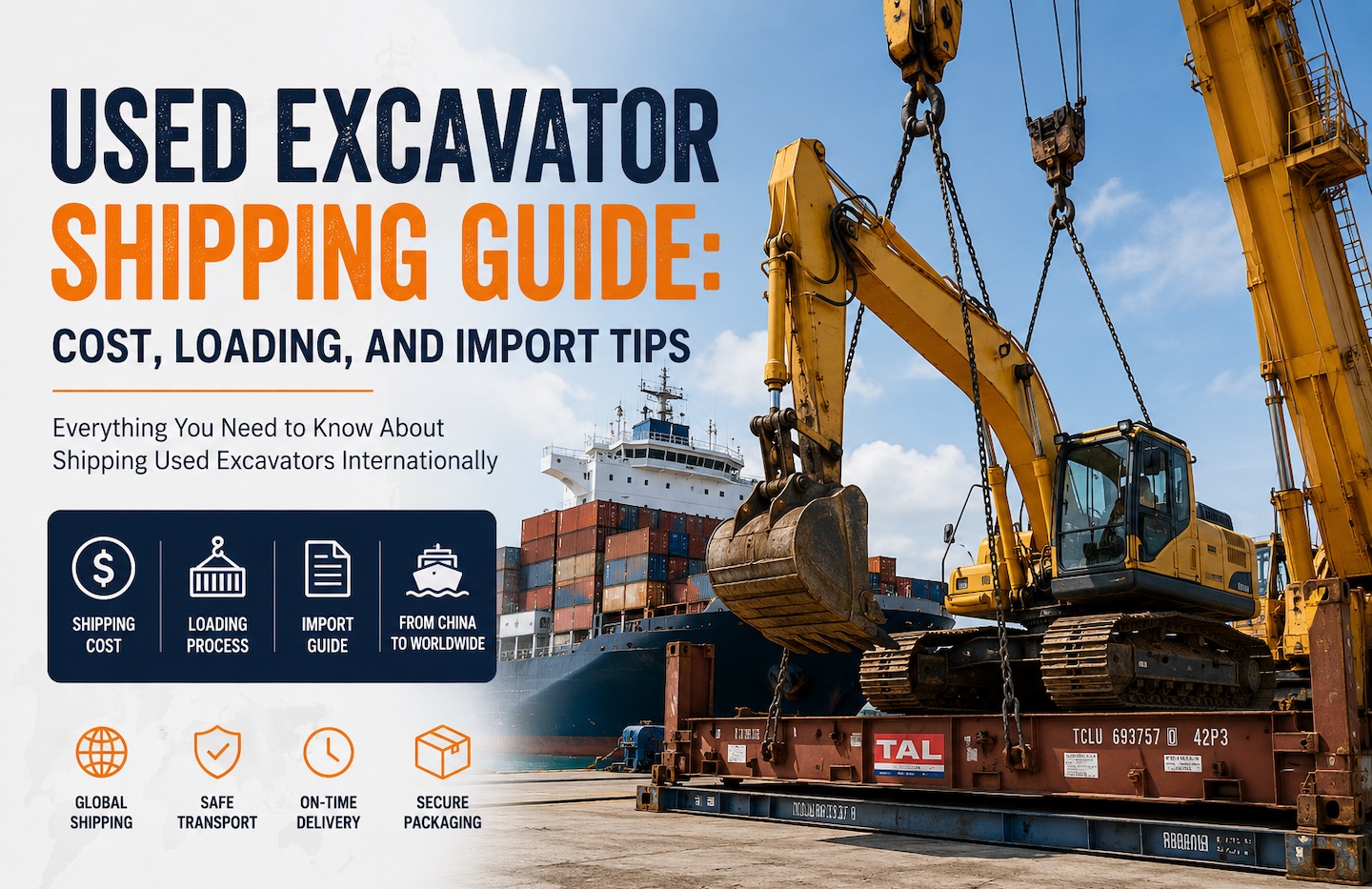
Understanding Used Excavator Shipping
Shipping a used excavator internationally is a multi-stage logistics process involving export preparation, inland transport, port handling, ocean freight, and import clearance.
In most cases, the process includes:
Machine inspection and preparation
Inland trucking to port
Export customs clearance in China
Loading onto vessel (container, Ro-Ro, or flat rack)
Ocean shipping
Import customs clearance at destination
Final inland delivery
Each stage has its own cost structure and risk level. A mistake at any stage can lead to delays or additional expenses.
For buyers importing a used excavator from China, understanding this process is essential because China is one of the largest global sources of second-hand construction machinery.
Why Many Buyers Source Used Excavators from China
China has become a major global supply hub for used construction equipment due to several structural advantages:
Large domestic construction machinery market turnover
Continuous fleet replacement from rental and construction companies
Wide availability of popular brands like Caterpillar, Komatsu, Hitachi, SANY, XCMG, Hyundai, and Doosan
Competitive pricing compared to Europe or Japan markets
Established export logistics and port infrastructure
Because of this ecosystem, many international buyers choose to import used excavators from China rather than sourcing locally, especially for Africa, the Middle East, Southeast Asia, and South America.
However, lower purchase price does not always mean lower total landed cost. Shipping is a major part of the final budget.
What Affects Used Excavator Shipping Cost
Shipping cost is not fixed. It varies depending on multiple technical and logistical factors.
1. Machine size and weight
Excavators are categorized by operating weight:
Mini excavators (1–6 tons)
Medium excavators (7–20 tons)
Large excavators (20–40+ tons)
Larger machines require special handling, often moving from container shipping to Ro-Ro or flat rack methods.
2. Shipping method
The three main methods are:
Container shipping
Ro-Ro (Roll-on/Roll-off)
Flat rack or open top container
Each method has different cost structures.
3. Destination country and port
Freight rates vary significantly depending on:
Distance from China
Port congestion
Local handling charges
Availability of return cargo routes
Africa and South America typically have higher per-unit shipping costs than Southeast Asia.
4. Seasonal freight fluctuations
Shipping prices can increase during:
Peak construction seasons
Pre-holiday export rush periods
Container shortages
5. Additional handling requirements
Extra costs may include:
Disassembly and reassembly
Lashing and securing
Port storage fees
Heavy lift charges
Inspection fees
Container Shipping vs Ro-Ro Shipping vs Flat Rack
Choosing the correct shipping method is one of the most important decisions in the export process.
Container Shipping
Container shipping is commonly used for small and medium excavators.
Advantages:
Better protection from weather and saltwater
Lower cost for compact machines
Easier tracking and handling
Limitations:
Size restrictions
May require disassembly (cab, boom, bucket)
Not suitable for very large excavators
Typical containers:
20GP for very small machines
40HQ / 40HC for mid-size units
Ro-Ro Shipping
Ro-Ro vessels allow machinery to be driven directly onto the ship.
Advantages:
No need for container fitting
Faster loading process
Ideal for large and complete machines
Limitations:
Less physical protection during transit
Availability depends on route and port
Ro-Ro is commonly used for medium to large excavators and construction fleets.
Flat Rack / Open Top Container
Flat rack shipping is used when machines exceed standard container dimensions but still require containerized transport.
Advantages:
Handles oversized equipment
Flexible loading configurations
Limitations:
Higher cost than standard containers
Exposure to weather during transport
Can an Excavator Fit in a Container?
Whether a used excavator can be shipped in a container depends mainly on size and structure.
General guidelines:
1–3 ton mini excavators: usually fit in 20GP or 40HQ
5–8 ton excavators: may fit in 40HQ with minor disassembly
10–15 ton excavators: often require flat rack or Ro-Ro
20+ ton excavators: typically Ro-Ro only
Common disassembly parts:
Bucket removal
Arm folding
Cabin adjustment
Track adjustment (in some cases)
Proper loading design is critical to avoid damage and reduce shipping costs.
How Excavators Are Prepared for Shipping
Before export, excavators must be properly prepared to ensure safe transportation.
Typical preparation steps include:
Cleaning mud, oil, and debris
Checking engine and hydraulic systems
Draining fuel or reducing fuel level (depending on regulation)
Removing attachments if required
Securing boom and arm with locks or chains
Checking track tension
Photographing machine condition for documentation
For buyers importing from China, this step is important because customs and shipping lines may reject improperly prepared equipment.
Step-by-Step Loading Process
Loading a used excavator is a controlled process carried out at the port or warehouse.
Typical procedure:
Final inspection before loading
Positioning machine for lifting or driving
Crane lifting or ramp driving (depending on method)
Securing machine inside container or vessel deck
Applying steel chains, wooden blocks, and lashing belts
Sealing container or confirming vessel stowage
Recording loading photos and container number
Proper lashing is essential to prevent movement during ocean transport, especially on long routes from China to Africa or South America.
Shipping Documents Required
International shipping requires strict documentation. Missing documents can delay customs clearance.
Common documents include:
Export documents in China
Commercial Invoice
Packing List
Export Declaration
Inspection Certificate (if required)
Bill of Lading
Import documents (destination country)
Import license (in some countries)
Customs declaration
Tax documentation
Insurance certificate (if applicable)
Understanding these documents helps reduce clearance delays.
Customs Clearance Process
Customs clearance happens at both export and import stages.
In China:
Export declaration is submitted
Machine inspection may be required
Customs approval is issued before shipment
At destination:
Documents are reviewed
Duties and taxes are assessed
Physical inspection may occur
Release is granted after payment
Each country has different rules, so buyers should always confirm local requirements before shipment.
How Long Does Shipping Take?
Transit time depends on destination:
Southeast Asia: 7–15 days
Middle East: 15–25 days
Africa: 25–40 days
Europe: 30–45 days
South America: 35–60 days
Delays can occur due to port congestion, weather conditions, or customs inspections.
Insurance for Excavator Shipping
Marine cargo insurance is strongly recommended.
It typically covers:
Damage during loading/unloading
Loss at sea
Accident during transport
Theft or partial damage
Considering the value of used excavators, insurance is a relatively small cost compared to potential risk.
Hidden Costs Buyers Often Overlook
Many buyers only calculate ocean freight, but total shipping cost includes more:
Inland trucking in China
Port handling fees
Documentation charges
Storage fees
Destination port charges
Customs clearance fees
Local transport after arrival
These can significantly affect the total landed cost.
Tips to Reduce Shipping Costs
Practical strategies include:
Choose the correct shipping method (container vs Ro-Ro)
Consolidate shipments when possible
Avoid peak shipping seasons
Work with experienced export coordinators
Confirm machine dimensions before purchase
Reduce unnecessary attachments before shipping
Proper planning can reduce total logistics cost significantly.
Common Mistakes in Excavator Shipping
Many first-time buyers make avoidable mistakes:
Underestimating machine dimensions
Ignoring container limitations
Not confirming import regulations
Choosing cheapest freight without reliability check
Missing required documents
Skipping insurance
These mistakes often lead to delays or unexpected costs.
Frequently Asked Questions (FAQ)
1. How much does it cost to ship a used excavator?
It depends on size, destination, and shipping method. Mini excavators cost significantly less than large machines.
2. Can used excavators be shipped in containers?
Yes, but mainly small to medium-sized machines.
3. What is better, container or Ro-Ro shipping?
Container offers better protection; Ro-Ro is better for large equipment.
4. Do excavators need to be disassembled for shipping?
Sometimes, especially for container shipping.
5. How long does shipping from China take?
Usually between 7 and 60 days depending on destination.
6. Is insurance necessary?
It is highly recommended for all international shipments.
7. What documents are required?
Invoice, packing list, bill of lading, and export declaration are standard.
8. Can I track my shipment?
Yes, most shipping lines provide tracking via container or booking number.
9. Are there restrictions when importing used excavators?
Yes, some countries require emissions or age compliance checks.
10. What is flat rack shipping?
It is used for oversized machinery that does not fit standard containers.
11. Who handles customs clearance?
Usually the buyer or a local customs broker.
12. Can attachments be shipped with the excavator?
Yes, but it may affect cost and container space.
13. What is the biggest cost factor?
Shipping method and machine size are the main cost drivers.
14. Do I need to pay taxes on used excavators?
Yes, depending on the import country regulations.
15. What is the safest shipping method?
Container shipping offers the highest physical protection.
Conclusion
Shipping a used excavator internationally is a technical process involving logistics, documentation, and careful planning. Buyers importing a used excavator from China should understand not only the machine itself, but also how transportation affects total cost, delivery time, and equipment condition upon arrival.
Choosing the right shipping method, preparing proper documentation, and working with experienced logistics coordination can significantly reduce risks and improve efficiency.
For international buyers, especially first-time importers, understanding the shipping process is just as important as selecting the right machine.
2026-07-06