

Excavator Maintenance Guide: Essential Tips to Extend Machine Life and Maximize Performance
Excavators are among the most valuable assets in construction, mining, demolition, and earthmoving projects. Whether you own a brand-new machine or a used excavator, proper maintenance is the key to ensuring reliable performance, reducing downtime, and maximizing return on investment.
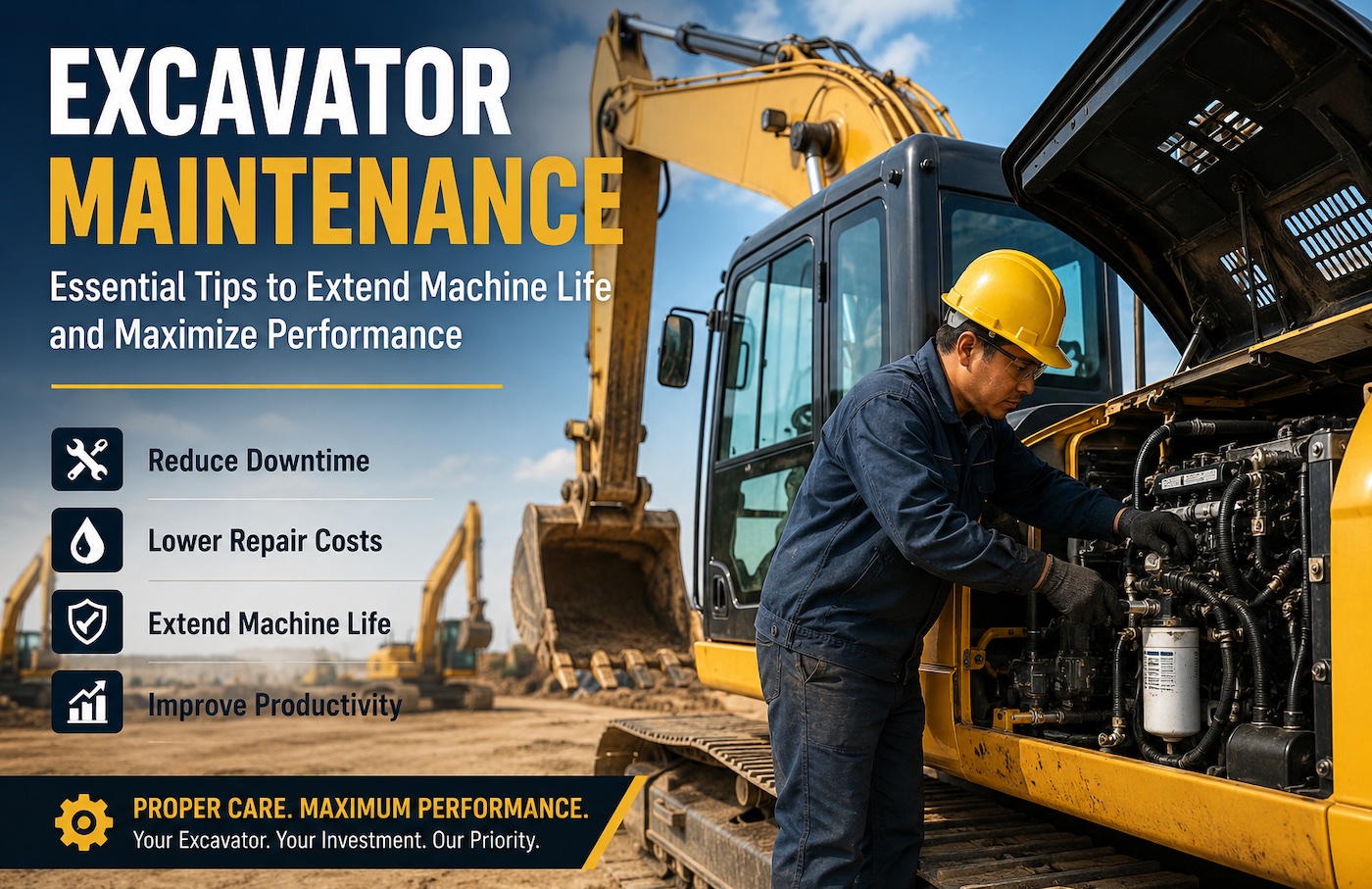
In this guide, we will cover the most important excavator maintenance practices that every equipment owner and operator should follow.
Why Excavator Maintenance Matters
Regular maintenance helps:
Extend the service life of the machine
Improve fuel efficiency
Reduce unexpected breakdowns
Lower repair costs
Maintain higher resale value
Improve job site productivity
Neglecting routine maintenance can lead to costly failures in critical components such as the engine, hydraulic system, undercarriage, and swing mechanism.
Daily Excavator Inspection Checklist
Before starting work each day, operators should perform a quick inspection.
Check Fluid Levels
Inspect and top up if necessary:
Engine oil
Hydraulic oil
Coolant
Fuel
Swing gearbox oil
Travel motor oil
Low fluid levels can cause overheating, excessive wear, and component failure.
Inspect for Leaks
Look underneath the machine and around hydraulic hoses, cylinders, pumps, and fittings for signs of:
Hydraulic oil leaks
Engine oil leaks
Coolant leaks
Fuel leaks
Addressing small leaks early can prevent expensive repairs later.
Check Attachments
Inspect buckets, quick couplers, and other attachments for:
Cracks
Loose bolts
Excessive wear
Damaged teeth or cutting edges
Worn attachments reduce digging efficiency and increase stress on the machine.
Hydraulic System Maintenance
The hydraulic system is the heart of an excavator.
Monitor Hydraulic Oil Quality
Dirty or contaminated hydraulic oil can damage pumps, valves, and cylinders.
Best practices include:
Following manufacturer oil change intervals
Using recommended hydraulic oil grades
Replacing hydraulic filters on schedule
Keeping hydraulic tanks sealed from contaminants
Inspect Hydraulic Hoses
Regularly check for:
Cracks
Abrasion
Bulging
Loose connections
Replacing worn hoses before failure helps avoid costly downtime.
Engine Maintenance
A well-maintained engine ensures optimal performance and fuel efficiency.
Replace Filters Regularly
Key filters include:
Engine oil filter
Fuel filter
Air filter
Water separator filter
Clean filters improve combustion efficiency and protect internal engine components.
Keep the Cooling System Clean
Overheating is a common cause of engine damage.
Operators should:
Check coolant levels regularly
Clean radiators and coolers
Remove dirt and debris from cooling fins
Inspect belts and hoses
A clean cooling system helps maintain proper operating temperatures.
Undercarriage Maintenance
The undercarriage can account for up to 50% of total excavator maintenance costs.
Maintain Proper Track Tension
Tracks that are too tight accelerate wear, while loose tracks may derail.
Check track tension according to the manufacturer's specifications.
Clean Tracks Daily
Mud, rocks, and debris can increase wear on:
Track chains
Rollers
Idlers
Sprockets
Routine cleaning extends undercarriage life and improves machine efficiency.
Greasing and Lubrication
Proper lubrication minimizes friction and wear.
Important grease points include:
Boom pins
Arm pins
Bucket pins
Swing bearing
Linkage joints
Greasing should be performed according to operating conditions and manufacturer recommendations.
Machines working in dusty or wet environments may require more frequent lubrication.
Electrical System Inspection
Modern excavators rely heavily on electronic systems.
Regularly inspect:
Battery condition
Wiring harnesses
Connectors
Lighting systems
Control panels
Corrosion and loose connections can cause unexpected operational issues.
Proper Operator Practices
Even the best maintenance program cannot compensate for poor operating habits.
Operators should:
Avoid sudden starts and stops
Warm up the machine before heavy work
Avoid overloading the bucket
Use the correct work mode
Follow recommended operating procedures
Well-trained operators significantly reduce machine wear and fuel consumption.
Maintenance Tips for Used Excavators
Used excavators require additional attention.
When purchasing a used machine:
Review maintenance records
Inspect hydraulic performance
Check engine condition
Examine undercarriage wear
Test all functions and controls
After purchase, perform a complete service including oil changes, filter replacement, and thorough inspection to establish a reliable maintenance baseline.
Conclusion
Excavator maintenance is essential for achieving maximum productivity, reliability, and profitability. By following a structured maintenance schedule and conducting regular inspections, owners can significantly reduce operating costs and extend the lifespan of their equipment.
Whether you operate a single machine or manage a large fleet, investing time in preventive maintenance will help keep your excavators working efficiently for years to come.
If you are looking for high-quality used excavators from leading brands such as Caterpillar, Komatsu, Hitachi, Volvo, Hyundai, Doosan, Kubota, SDLG, and LiuGong, our team can help you find reliable equipment that is ready to work.
2026-06-22