

Excavator Operation and Maintenance Tips: Maximize Performance and Extend Service Life
Excavators are among the most valuable assets on any construction, mining, or earthmoving project. Proper operation and regular maintenance not only improve productivity but also reduce downtime, repair costs, and fuel consumption. Whether you own a new machine or a used excavator, following the right maintenance practices can significantly extend its service life.
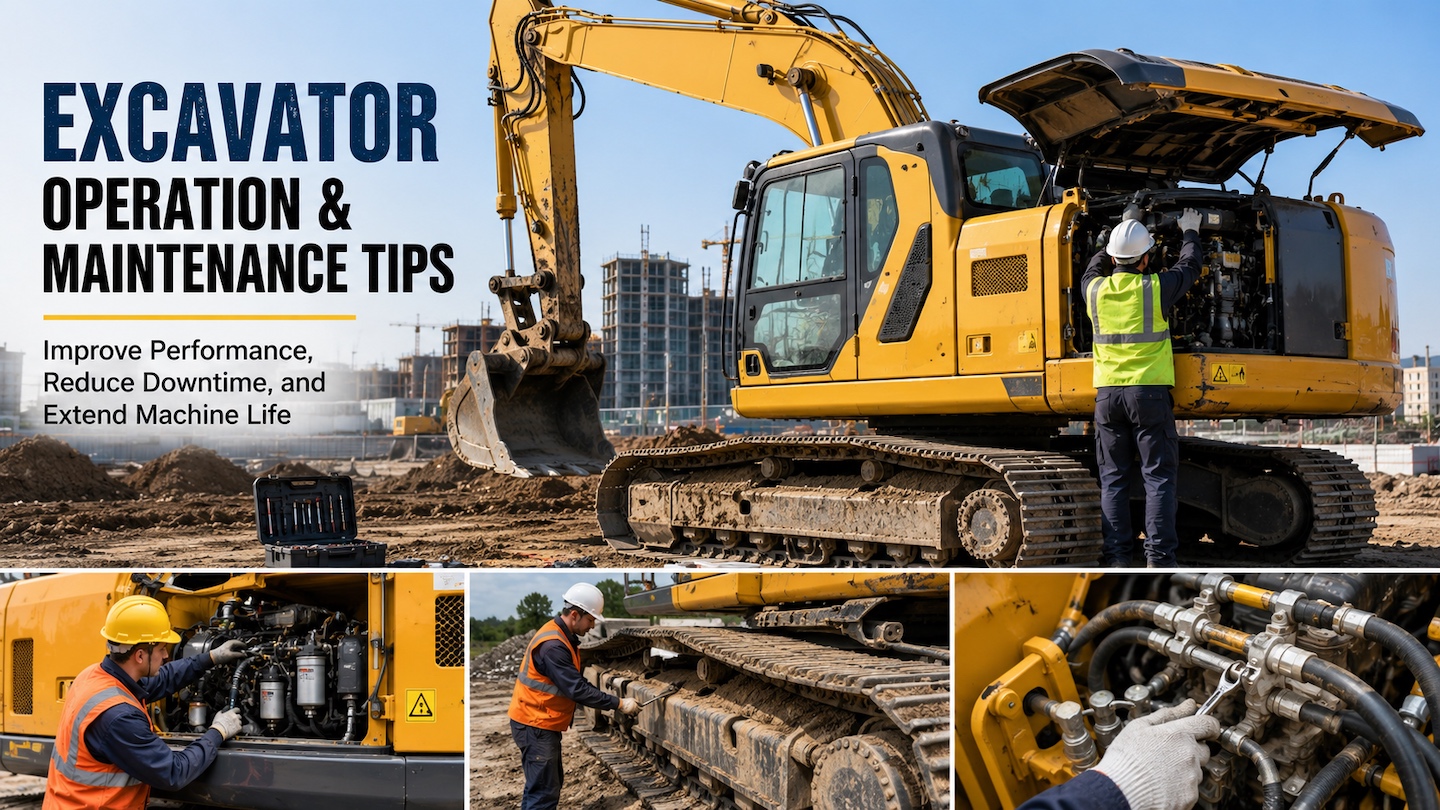
1. Perform Daily Pre-Operation Inspections
Before starting work each day, operators should conduct a thorough inspection of the machine:
Check engine oil, hydraulic oil, coolant, and fuel levels.
Inspect hoses, cylinders, and fittings for leaks.
Examine tracks, rollers, and sprockets for excessive wear.
Ensure all lights, alarms, and safety devices function properly.
Remove dirt and debris from the engine compartment and cooling system.
A few minutes of inspection can prevent costly failures during operation.
2. Warm Up the Machine Properly
Starting heavy work immediately after engine startup can cause unnecessary wear.
Best practices include:
Allow the engine to idle for several minutes.
Warm the hydraulic system before applying full loads.
Operate boom, arm, and bucket functions slowly until hydraulic oil reaches working temperature.
Proper warm-up improves lubrication and protects hydraulic components.
3. Operate Smoothly and Avoid Excessive Loads
Aggressive operation can shorten machine life and increase fuel consumption.
Tips for efficient operation:
Avoid sudden starts, stops, and sharp swings.
Use the correct digging angle for maximum efficiency.
Do not overload the bucket.
Minimize unnecessary travel and idling time.
Match the machine size to the job requirements.
Smooth operation reduces stress on the engine, hydraulic system, and undercarriage.
4. Maintain the Hydraulic System
The hydraulic system is the heart of an excavator.
To keep it in peak condition:
Replace hydraulic filters according to manufacturer recommendations.
Use only approved hydraulic oil grades.
Monitor oil cleanliness and contamination levels.
Repair leaks immediately.
Keep hydraulic connections clean during maintenance.
Clean hydraulic oil helps prevent pump and valve failures.
5. Pay Special Attention to the Undercarriage
The undercarriage often represents a significant portion of maintenance costs.
Recommended practices:
Clean mud, rocks, and debris daily.
Maintain proper track tension.
Rotate track components when necessary.
Avoid excessive travel on hard surfaces.
Inspect rollers, idlers, and sprockets regularly.
Proper undercarriage care can greatly reduce operating expenses.
6. Keep the Cooling System Clean
Overheating is a common cause of engine damage.
Regularly:
Clean radiator and cooling fins.
Check coolant levels.
Inspect belts and cooling fans.
Remove dust and debris from air passages.
A clean cooling system ensures stable engine performance in hot and dusty environments.
7. Follow Scheduled Maintenance Intervals
Preventive maintenance is always more economical than major repairs.
Key maintenance tasks include:
Engine oil and filter replacement
Fuel filter replacement
Air filter inspection and cleaning
Hydraulic oil and filter changes
Greasing all lubrication points
Always follow the service intervals specified by the manufacturer.
8. Use Genuine Parts and Quality Fluids
Low-quality replacement parts may reduce reliability and increase long-term costs.
Choose:
Genuine or OEM-quality filters
Recommended engine oils
Approved hydraulic fluids
High-quality lubricants and grease
Quality components help maintain machine performance and resale value.
9. Train Operators Regularly
Even the best-maintained excavator can suffer from poor operating habits.
Professional operators should understand:
Safe operating procedures
Fuel-efficient techniques
Daily inspection requirements
Basic troubleshooting methods
Well-trained operators contribute significantly to machine longevity.
Conclusion
Effective excavator maintenance is a combination of daily inspections, proper operating techniques, timely servicing, and the use of quality parts. By following these best practices, owners and contractors can maximize machine availability, reduce operating costs, and extend the working life of their excavators.
A well-maintained excavator delivers better performance, higher productivity, and greater profitability throughout its service life.
2026-06-04