

What Is a Good Working Hour Range and Condition for a Used Excavator? A Practical Buyer's Guide
How many hours is too many for an excavator?When buying a used excavator, one of the first questions most buyers ask is:
"How many hours should a used excavator have?"
It's a reasonable question. After all, working hours are often compared to the mileage of a used car. A machine with fewer hours appears more attractive, while one with over 10,000 hours may seem risky.
However, experienced equipment buyers know that working hours tell only part of the story.
A well-maintained excavator with 9,000 hours can easily outperform a neglected machine with only 4,000 hours. Likewise, an excavator that has spent years working under light-duty conditions may remain in excellent mechanical condition despite relatively high hours.
This guide explains what excavator hours really mean, what hour range is generally considered good, and—more importantly—what you should inspect before making a purchase.
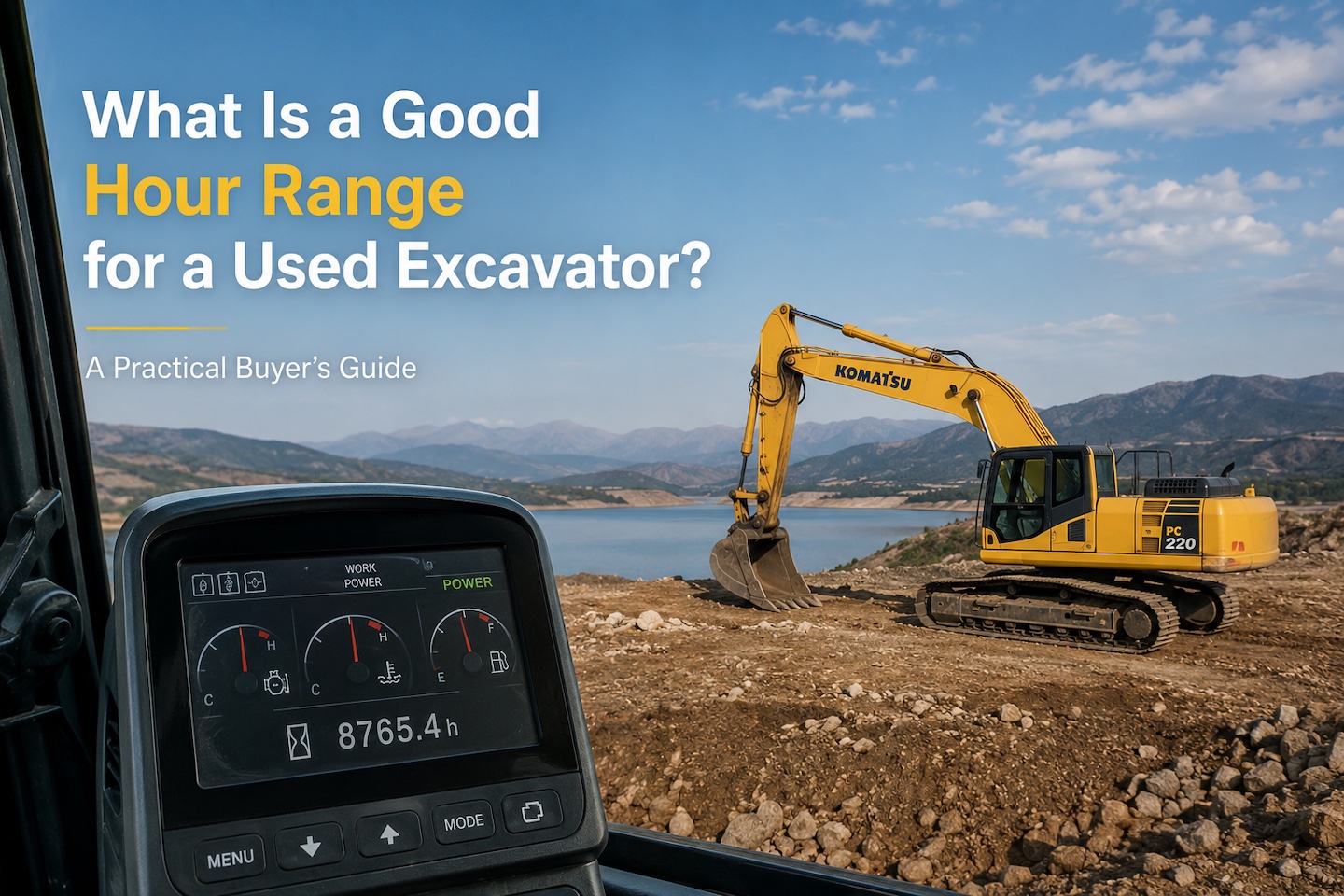
Why Working Hours Matter
Every excavator is equipped with an hour meter that records the total time the engine has operated.
Working hours provide an estimate of how much the machine has been used, helping buyers evaluate potential wear on major components such as:
Engine
Hydraulic pumps
Hydraulic cylinders
Swing motor
Final drives
Undercarriage
Boom and arm pins
Bucket linkage
In general, more operating hours mean more wear. However, the relationship is not always straightforward.
For example:
A machine working in a quarry experiences significantly heavier stress than one used for landscaping.
An excavator operating in dusty mining conditions wears faster than one working on municipal projects.
Regular maintenance can dramatically extend service life.
Therefore, hours should always be considered together with maintenance history and overall condition.
What Is Considered a Good Hour Range?
Although there is no universal standard, buyers and equipment professionals generally use the following guideline.
Working Hours General Condition Buying Recommendation
Under 3,000 Nearly new Excellent if maintenance records are available
3,000–6,000 Lightly used Very desirable for most buyers
6,000–10,000 Moderately used Often offers the best balance of price and remaining life
10,000–15,000 Heavy use Requires careful inspection
Over 15,000 Very high hours Purchase only after a comprehensive inspection
These ranges are only references. Different brands and applications can produce very different results.
Is Lower Hour Always Better?
Not necessarily.
Many first-time buyers focus exclusively on finding the lowest-hour machine available.
This approach can lead to costly mistakes.
Consider the following examples.
Machine A
3,800 hours
Stored outdoors for several years
Hydraulic seals dried out
Rust on structural components
Poor maintenance history
Machine B
8,700 hours
Serviced on schedule
Original paint
Clean hydraulic system
Complete maintenance records
Operates smoothly
Most experienced buyers would choose Machine B.
The reason is simple.
Maintenance history usually matters more than the number displayed on the hour meter.
How Long Can an Excavator Last?
Modern excavators are designed for long service lives.
Under proper maintenance, many machines remain productive well beyond 15,000 working hours.
Typical service life may look like this:
Small excavators: 8,000–12,000 hours
Medium excavators: 12,000–18,000 hours
Large mining excavators: 20,000+ hours with component rebuilds
High-quality machines from leading manufacturers frequently continue operating after major component overhauls.
It is not unusual to see well-maintained excavators with more than 20,000 hours still working reliably on construction sites around the world.
What Causes Excavators to Wear Out?
Working hours alone do not determine machine health.
Several factors have a much greater influence on longevity.
Maintenance Quality
Routine maintenance is the single most important factor.
Regular replacement of:
Engine oil
Hydraulic oil
Fuel filters
Air filters
Coolant
Final drive oil
can significantly extend machine life.
Skipping scheduled maintenance accelerates wear across the entire hydraulic and powertrain systems.
Working Environment
Machines working in harsh environments experience much faster wear.
Examples include:
Quarry operations
Mining
Demolition
Coastal areas with salt exposure
Extremely dusty construction sites
By comparison, excavators used for municipal work or landscaping often remain in better condition despite similar operating hours.
Operator Skill
Experienced operators reduce unnecessary stress on the machine.
Poor operating habits such as:
Aggressive digging
Frequent impacts
Sudden directional changes
High-speed travel over rough terrain
can shorten component life considerably.
Components That Deserve Close Attention
When inspecting a used excavator, look beyond the hour meter.
Pay particular attention to the following systems.
Engine
Check for:
Cold start performance
Excessive smoke
Oil leaks
Abnormal noises
Blow-by from the crankcase
A healthy engine should start easily and idle smoothly.
Hydraulic System
The hydraulic system is one of the most expensive parts to repair.
Inspect for:
Slow movements
Weak digging force
Hydraulic leaks
Pump noise
Oil contamination
Smooth, responsive operation is usually a good sign.
Undercarriage
The undercarriage often accounts for a significant portion of future repair costs.
Inspect:
Track chains
Rollers
Idlers
Sprockets
Track shoes
Track tension
Heavy wear here may require substantial investment after purchase.
Structural Components
Carefully inspect:
Boom
Arm
Bucket
Welded repairs
Cracks
Pin wear
Poor-quality repairs may indicate previous structural damage.
Swing System
Excessive swing bearing play can be costly.
Check for:
Abnormal movement
Grinding noises
Uneven rotation
Oil leakage
Can Hour Meters Be Changed?
Unfortunately, yes.
On older machines, hour meters can sometimes be replaced or reset.
While electronic systems on newer excavators are more secure, buyers should still verify the displayed hours whenever possible.
Signs of possible inconsistencies include:
Worn pedals with unusually low hours
Damaged joysticks
Torn seat cushions
Heavy paint wear
Excessive pin movement
If a machine claims only 2,000 hours but shows extensive wear, further investigation is recommended.
Questions Every Buyer Should Ask
Before purchasing a used excavator, ask the seller:
Is the hour meter original?
Are service records available?
Has the engine ever been rebuilt?
Have the hydraulic pumps been repaired?
Have the injectors or turbocharger been replaced?
Is the machine currently working?
Can it be tested under load?
Are inspection videos available?
Reliable answers often reveal more than the hour reading itself.
What Hour Range Offers the Best Value?
For many buyers, the best value is not the newest machine.
Instead, it is the machine that provides the best balance between purchase price, remaining service life, and maintenance condition.
In many cases, excavators with 6,000 to 10,000 working hours represent an excellent value.
Machines in this range are often:
Significantly less expensive than low-hour units
Still mechanically sound when properly maintained
Widely available across popular brands
Suitable for years of continued service
Of course, every machine should be evaluated individually.
Brand Reputation Also Matters
Different manufacturers have different engineering standards, durability, and parts availability.
Well-maintained excavators from globally recognized manufacturers often retain their value and remain reliable even at higher operating hours.
When comparing machines with similar specifications, consider factors such as:
Build quality
Dealer support
Availability of replacement parts
Local technician experience
Resale value
A reputable brand combined with proper maintenance is often a better investment than simply choosing the machine with the fewest hours.
Common Mistakes Buyers Make
Many first-time buyers make avoidable mistakes during the purchasing process.
These include:
Choosing the lowest-hour machine without inspection
Ignoring maintenance records
Overlooking hydraulic performance
Focusing only on engine condition
Neglecting undercarriage wear
Buying solely based on appearance
Assuming fresh paint means good condition
A thorough inspection always provides a more accurate assessment than cosmetic appearance or hour readings alone.
Final Thoughts
So, what is a good hour range for a used excavator?
There is no single number that guarantees a good purchase.
While machines with fewer hours generally have more remaining service life, working hours should never be the only factor influencing your decision.
A carefully maintained excavator with 8,000 or even 10,000 hours can deliver years of dependable service, while a poorly maintained low-hour machine may require expensive repairs shortly after purchase.
The smartest buyers evaluate the complete picture:
Actual operating condition
Maintenance history
Hydraulic performance
Structural integrity
Undercarriage wear
Engine health
Brand reputation
Availability of spare parts
Ultimately, the best used excavator is not simply the one with the lowest hour meter—it is the one that has been properly maintained, thoroughly inspected, and is ready to continue working reliably on your projects.
2026-07-03