

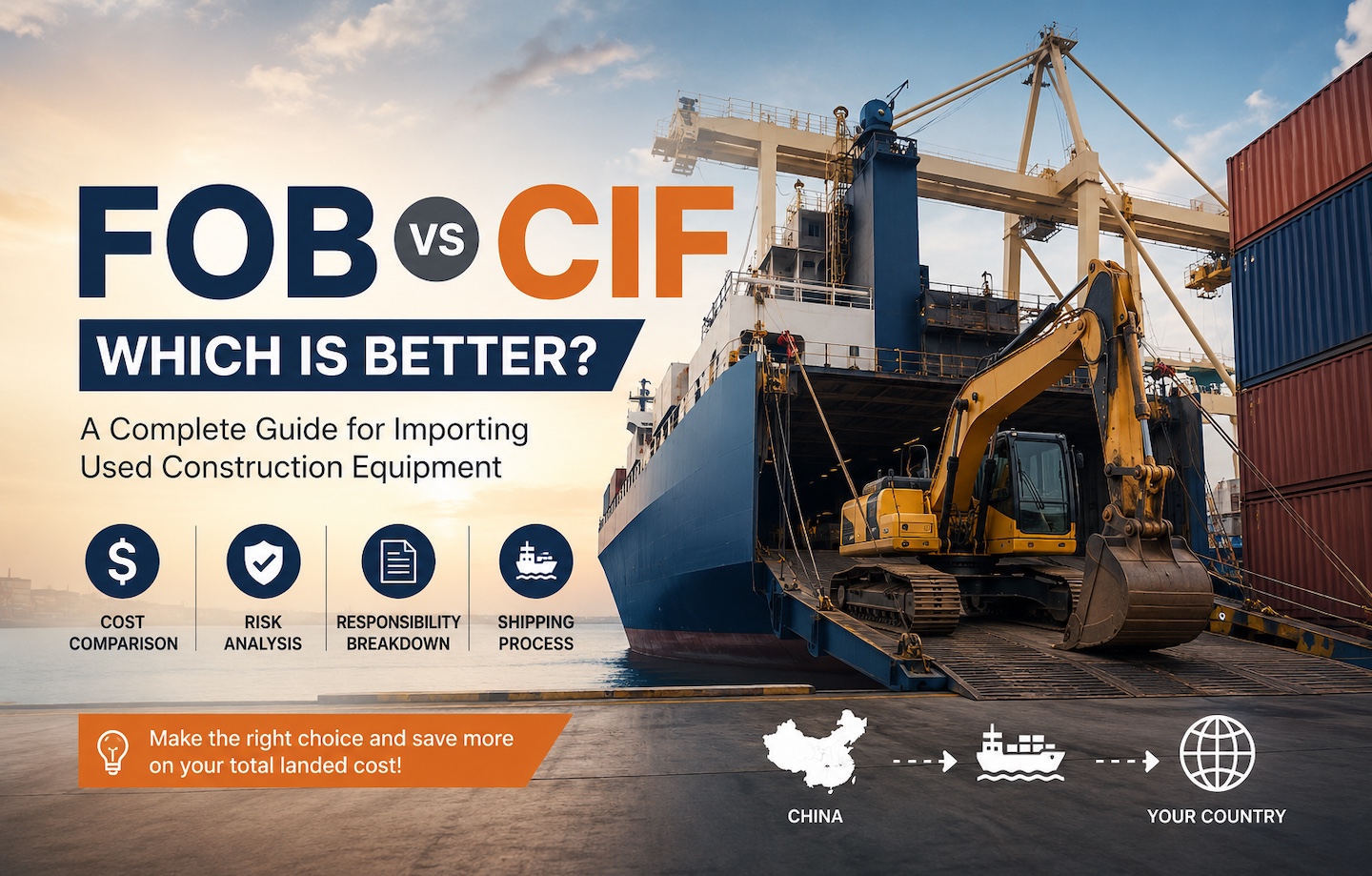
FOB vs CIF: Which Is Better for Importing Used Construction Equipment from China?
A Complete Guide for Buying Used ExcavatorsWhen importing used construction equipment from China, one of the first questions buyers encounter is:
Should I choose FOB or CIF?
Many first-time importers assume that CIF is always cheaper because the supplier arranges the shipping. Others believe FOB is the only option professional buyers use.
The truth is neither Incoterm is universally better. The right choice depends on your purchasing experience, shipping network, destination country, and total landed cost.
In this guide, we'll explain the differences between FOB vs CIF, compare their advantages and disadvantages, and help you choose the best shipping method for importing excavators, wheel loaders, bulldozers, motor graders, rollers, cranes, and other heavy equipment.
What Is FOB?
FOB (Free On Board) means the seller is responsible for delivering the machine to the designated port and loading it onto the vessel.
After the equipment is loaded onto the ship, responsibility and shipping risk transfer to the buyer.
Under FOB, the buyer typically arranges:
Ocean freight
Marine insurance
Destination customs clearance
Import duties and taxes
Inland transportation
Seller's Responsibilities
The exporter handles:
Machine inspection
Cleaning (if required)
Export documentation
Export customs clearance
Delivery to the port
Loading onto the vessel
Once the equipment is safely onboard, the seller's responsibility ends.
What Is CIF?
CIF (Cost, Insurance and Freight) means the seller pays for:
Ocean freight
Marine insurance
Transportation to the destination port
However, once the vessel arrives at the destination port, the buyer is still responsible for:
Import customs clearance
Import taxes
Port handling charges
Local transportation
Storage charges (if any)
Many buyers mistakenly believe CIF means "door-to-door delivery." It does not.
CIF only covers transportation to the destination port.
FOB vs CIF: Key Differences
| Item | FOB | CIF |
| Ocean Freight | Buyer | Seller |
| Marine Insurance | Buyer | Seller |
| Export Customs | Seller | Seller |
| Import Customs | Buyer | Buyer |
| Import Duties | Buyer | Buyer |
| Inland Delivery | Buyer | Buyer |
| Shipping Arrangement | Buyer | Seller |
| Freight Cost Visibility | High | Lower |
FOB vs CIF: Cost Comparison
Many buyers focus only on the machine price.
Experienced importers calculate the total landed cost, including:
Machine price
Inland transport in China
Port handling charges
Ocean freight
Marine insurance
Destination port charges
Customs clearance
Import duties
Inland transportation
Sometimes FOB appears cheaper, but expensive freight booked independently can increase the final cost.
Likewise, a CIF quotation may seem higher initially but could reduce total logistics costs if the supplier has competitive freight rates.
The only accurate comparison is the total landed cost, not just the purchase price.
Risk Comparison
FOB
The buyer controls shipping.
Advantages include:
Freedom to choose the shipping company
Better freight negotiation
Greater logistics flexibility
Full visibility of shipping costs
Potential drawbacks:
More coordination required
Suitable freight forwarder needed
Greater responsibility for transportation
CIF
The seller arranges the shipping.
Advantages include:
Simpler purchasing process
Less paperwork
Easier for first-time importers
Reduced logistics coordination
Potential drawbacks:
Less control over freight selection
Freight cost may be less transparent
Insurance coverage is usually basic
Which Is Better for Used Excavator Buyers?
The answer depends on your importing experience.
FOB May Be Better If You:
Import regularly
Already work with a freight forwarder
Want to compare shipping prices
Need flexible shipping schedules
Purchase multiple containers annually
Large construction companies often prefer FOB because they already have established logistics partners.
CIF May Be Better If You:
Are importing for the first time
Have no shipping agent
Want a simpler purchasing process
Prefer one supplier to coordinate transportation
Many small contractors choose CIF because it reduces the complexity of international shipping.
Hidden Costs Buyers Often Forget
Many new importers compare only FOB and CIF prices.
However, several additional costs may apply regardless of the shipping term.
These may include:
Destination terminal handling charges
Port storage fees
Customs inspection fees
Import duties
VAT or GST
Local trucking
Crane unloading
Documentation fees
Understanding these costs before purchasing helps avoid unexpected expenses after the equipment arrives.
Does CIF Include Customs Clearance?
No.
This is one of the most common misunderstandings.
CIF includes:
Cost of goods
Marine insurance
Ocean freight
It does not include:
Import customs clearance
Import taxes
Port handling
Local transportation
Delivery to your job site
If you require delivery beyond the destination port, discuss additional logistics services with your supplier or freight forwarder.
Does FOB Include Loading?
Yes.
Under FOB, the seller is responsible for loading the machine onto the vessel at the agreed export port.
After loading is complete, shipping risk transfers to the buyer.
Which Shipping Term Saves More Money?
There is no universal answer.
FOB may save money when:
Freight rates are lower through your logistics partner
You consolidate multiple shipments
You negotiate better shipping contracts
CIF may save money when:
The supplier has access to discounted freight rates
Shipping volume allows lower transportation costs
You want to avoid arranging logistics independently
Always compare:
Total Machine Cost + Total Logistics Cost
instead of comparing only FOB and CIF prices.
Tips Before Choosing FOB or CIF
Before placing your order, ask your supplier:
Which port is included?
What insurance coverage is provided?
Which shipping line will transport the equipment?
Are destination charges included?
What documents will be supplied?
What is the estimated transit time?
Is the machine shipped by container, flat rack, or Ro-Ro vessel?
Clear communication before shipment helps avoid delays and unexpected costs.
Frequently Asked Questions
Is FOB cheaper than CIF?
Not always.
FOB generally has a lower quoted price because freight and insurance are excluded, but the total landed cost may end up being similar or even higher depending on shipping rates.
Which is safer for first-time buyers?
CIF is often easier because the supplier arranges transportation, although buyers should still understand the destination charges they will pay.
Which option do experienced importers prefer?
Many experienced importers prefer FOB because it offers greater control over freight costs and shipping schedules.
Does CIF include delivery to my warehouse?
No.
Standard CIF ends at the destination port.
Transportation from the port to your warehouse is normally arranged and paid for by the buyer.
Can I request both FOB and CIF quotations?
Absolutely.
Requesting both quotations allows you to compare the total import cost and choose the most economical option.
Final Thoughts
Choosing between FOB and CIF is not about finding one shipping term that is always better. It's about selecting the option that best matches your logistics experience, budget, and import strategy.
If you already have reliable freight partners and import equipment regularly, FOB often provides greater flexibility and cost control.
If you're importing used construction equipment for the first time or prefer a simpler process, CIF can reduce coordination and make international shipping more straightforward.
Before making your decision, compare the total landed cost, understand your responsibilities under each Incoterm, and confirm all charges with both your supplier and freight forwarder. A well-informed shipping choice can help reduce unexpected costs and ensure your equipment arrives smoothly and on schedule.
2026-07-01